Featured Post

Review: Leatherstocking Golf Course (Part 1)

Most people who visit Cooperstown, New York, are going to see the National Baseball Hall of Fame. It is the obvious reason to visit the town...

Showing posts with label space. Show all posts

Friday, June 14, 2024

The Sweetest Real Estate In The Solar System

Way back in 2019, the New Horizons space probe passed by the Kuiper Belt object Arrokoth, a 20-mile-wide chunk of ice that bears an uncanny resemblance to a snowman. Arrokoth is thus officially the farthest object ever closely observed and explored, and unless a new target for New Horizons to be pointed at is found in the next few years (an unlikely scenario, considering how little fuel New Horizons has left), Arrokoth will hold that record for a very long time.
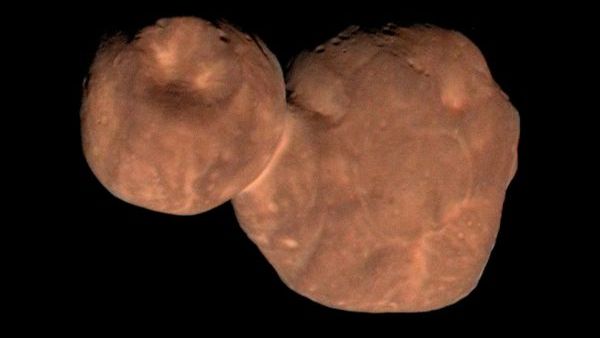
 NASA/Johns Hopkins University Applied Physics Laboratory
While the snowman resemblance is kind of neat, there really isn't much to Arrokoth to excite the average person. It's a chunk of ice floating around billions of miles away. However, scientists were intrigued by the object's color; Arrokoth is a rusty red, which isn't generally a color that ice becomes. The theory at the time was that the solar wind had converted Arrokoth's various ices into organic molecules, and that these organic molecules were responsible for the object's unusual color.

Unfortunately, New Horizons couldn't turn around for a second look to answer this very important question, but it didn't need to, courtesy of a new study. The experiment the researchers undertook was shockingly simple: Build a miniature Kuiper Belt object, bombard it with high-energy electrons to simulate billions of years worth of solar wind, and observe the results.

The first thing they noticed after irradiating their chunk of ice was the presence of polycyclic aromatic hydrocarbons, which are actually quite common throughout the universe. But beyond that, they found a couple surprises, namely a sugar you're familiar with: glucose. The very same glucose, in fact, that your body depends on. So, if you went out there, dug up a little chunk, and licked it, the ice would actually taste sweet. It's those various sugars, the researchers said, that give Arrokoth its unusual color.

But before you suit up for the longest trip to the candy store ever undertaken, there's a catch to Arrokoth's sweetness. During their test, the researchers also detected glycerol, which is an important ingredient in soap. And that's not such a nice thing to eat. Unless, of course, you've just dropped the F-dash-dash-dash. Ralphie would probably appreciate a sweet-tasting soap ... so long as he doesn't get his tongue stuck to it.

Friday, May 3, 2024

Recently Discovered Asteroid Is Still In Geologic Diaper

Trust me, that headline makes sense in the end.

Back in November 2023, the Lucy space probe passed the asteroid 152830 Dinkinesh, a main-belt asteroid about a kilometer in diameter. During this close fly-by, Lucy discovered that Dinkinesh was actually a binary asteroid, as it had a small companion moon (about 200 meters in diameter). This moon was named Selam; its namesake is a young Australopithecus afarensis individual discovered about 25 years ago. Australopithecus afarensis, if you're not familiar, was an early homidid species, with the most famous example being ... Lucy, the space probe's namesake, who lived 3.2 million years ago. 

Keep that number in mind for a moment as we get back to Selam. The asteroid, not the ancient hominid.

Naturally, astronomers performed all sorts of research on Selam, and recently made a rather interesting discovery, based on the moon's orbit: Selam is young. It's a veritable infant, in fact, coming in at just 2 to 3 million years old. Now, that's obviously pretty old by normal human standards, but compared to the age of the solar system? That's nothing. Not only that, the asteroid is actually younger than the namesake of the space probe that discovered it. Pretty rare for a celestial object we've visited to be younger than something tangible in human history, but here we have it.

Also, the researchers calculated Selam's age using something called a tidal-BYORP equilibrium equation, and yes, the joke here is that BYORP is a funny-sounding acronym. Look, not everything can be high-brow and informative. Sometimes you just have to appreciate BYORP and leave it at that.


Friday, March 15, 2024

To Boldly Go Where No Head Has Ached Before

Space travel is a bit of a headache. Actually, that's underselling the problem, space travel is an enormous headache. There are so many things that can go wrong and so many things that need to be accounted for to keep astronauts safe in a cruelly punishing environment. You have to think about air, radiation, the lack of gravity ... the list goes on and on.

And now, if the metaphorical headaches weren't bad enough, astronauts also need to contend with the actual headaches

In research published in Neurology, 22 of 24 astronauts followed during a 7-year period of observation on the International Space Station experienced one or more instances of headache, with 378 headaches being reported over 3,596 total days in space. In addition, before going into space, only 38% of those astronauts experienced headaches; after returning to Earth, no astronaut reported experiencing headaches.

It's perhaps not surprising that headaches were worse during the first week in space, being both worse in severity and more likely to be migraine-like, but headaches continued to occur throughout each astronaut's time in space.

So, what's going on to make space both a figurative and literal headache? While the study authors stressed that the study findings only show an association between space travel and headaches, they added that it most likely comes down to the lack of gravity. Not only does zero G degrade your bones and muscles, it also affects balance and posture. Space motion sickness is extremely common, and while vomiting may be the first thing that comes to mind for astronauts who haven't gotten their space legs yet, headache is actually just a common a symptom of motion sickness.

Now obviously, there are bigger problems to tackle than space headaches when it comes to making human space travel possible. Still, it is an important issue to tackle. We don't want the first person to step foot on Mars to walk out of the lander and say "that's one small step for man, one giant leap for the ibuprofen keeping the migraines at bay."

Wednesday, August 2, 2023

Voyager 2 Is Truly All Alone Right Now

NASA's made a bit of a boo-boo. They recently sent a series of planned commands to Voyager 2, which is something they do from time to time. However, somewhere in those commands was apparently an order to rotate the craft by 2 degrees. That's not a lot, but when we're dealing with a spacecraft over 12 billion miles away, it's more than enough to completely cut communication with Voyager 2. Oops.

There is some good news. The Jet Propulsion Laboratory confirmed a bit later utilizing the Deep Space Network that Voyager 2 is still broadcasting. They didn't fully lose it; Voyager 2 is still alive. NASA engineers will attempt to contact the probe and get it to point back at Earth. But even if that doesn't work, all is not lost, as Voyager 2 is programmed to automatically point itself at Earth every few months. The next reorientation is scheduled for October 15. Contact should be resumed then.

In the end, this should represent a relatively harmless blip in Voyager 2's long life, but also, come on NASA, what are you doing? Voyager's been cruising for 46 years now and it's billions and billions of miles away? Don't get it upset now. Come on.

Thursday, July 6, 2023

Whiskey IN SPACE

Sometimes, the best reason we have for doing something is "why not?" And that's exactly the mentality Mystic Farm & Distillery in Durham, N.C., brought to the table when they announced they were going to age a batch of bourbon in space for a year. 

Theoretically, anyway. It's important to note here that nothing has happened yet, and in fact the rocket Mystic is planning on launching the Mystic Galactic bourbon into orbit with doesn't technically exist (The Exploration Company's Nyx rocket is planning its first test launch in 2024 and first official launch 2 years later). For now, the whiskey is going to age on Earth normally, as any normal bourbon would. But when 2026 comes around, that bourbon's going to space. Somewhat hilariously, bourbon has rules to it, and one of the rules of bourbon is that it has to be aged in the United States. Space doesn't count. So while the label might say Mystic Galactic bourbon, Mystic's really engaging in a bit of tomfoolery, as they've been forced by the Alcohol and Tobacco Tax and Trade Bureau to register the beverage as a "distilled whiskey spirit."

Adding to the tomfoolery is the anticipated price of Mystic Galactic: $75,000 per bottle. Not exactly something your average whiskey/space enthusiast is going to be able to sample or enjoy. Just something for rich people to show off at parties. Which is a shame, but it's not cheap sending things to space. I suppose the rest of us will just have to get drunk off of bland, boring, Earth-based beverages like the poor peasants we are.

Thursday, June 8, 2023

Saturn Becomes Moon Champion Of The Solar System

Jupiter and Saturn have a lot of moons. Many, many moons. Earlier this year, Jupiter edged ahead of Saturn in the official total, with scientists announcing 12 new moons, bringing its total up to 92, compared with 83 for Saturn. But Jupiter didn't hold onto the crown for long, as scientists have now announced 62 new moons around Saturn. This means Saturn now has 145 official moons, making it the first planet to have more than 100. That is a lot of moons. I distinctly remember growing up learning that Saturn only had 18 moons. And I'm not that old. Naturally, Cassini helped boost the total, but most of the new moons were discovered here on Earth. This batch of 62 came from observations out of an observatory in Hawaii.

Naturally, all of these new moons are tiny, irregular rocks, just a few kilometers across. There are no undiscovered Titans lurking around Saturn. And of course, similar observations of Jupiter could reveal just as many similar moons, if not more. Jupiter may end up taking the title of Moon Champion back. But for now, Saturn is very, very far ahead.

Friday, April 28, 2023

AI Is Coming For Exoplanet Detection

Another day, another story about how artificial intelligence is taking over the world. This time, a machine-learning program has successfully located an extrasolar planet (great, AI's not even satisfied with our world) within a protoplanetary disk around a young star. The program had been tested on solar systems that we already knew had planets, but when it was applied to a set of older images it hadn't analyzed yet, the AI identified a planet in a system that had previously been overlooked. We missed the exoplanet, the AI didn't. And, according to the researchers, the AI only took an hour to find the exoplanet, which is a lot faster than what humans can manage. Once the technology is scaled up and tested a bit more, it could go through a lot of data extremely quickly. Who knows how many exoplanets we've missed that it could find? There really will be nowhere for humanity to hide when the robot revolution comes.

Wednesday, March 15, 2023

In Space, No One Can Hear Your Rolls-Royce

Not a lot to say about this, but hearing that Rolls-Royce, maker of luxury automobiles, is making a nuclear reactor to be used in space travel, is not the sort of news you expect to hear. However, if they don't put the hood ornament on the front of any Rolls-Royce–powered spacecraft, I'm going to be extremely disappointed.

Thursday, February 2, 2023

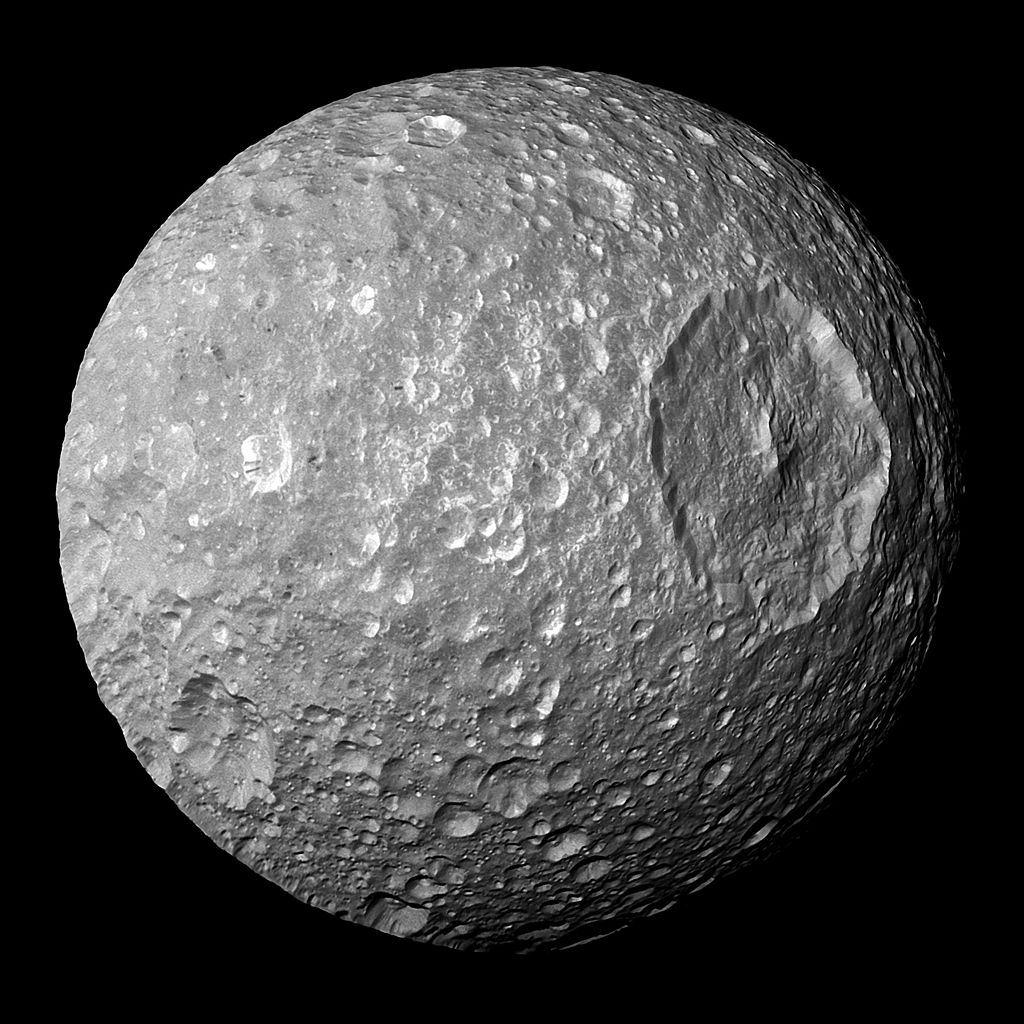
Could the Death Star Moon Have an Ocean?

NASA/Jet Propulsion Laboratory
People know the Saturnian moon Mimas for one thing: The enormous crater that makes it look like the Death Star. In every other regard, Mimas appears to be a cold, dead, icy rock with pretty much nothing going on. The surface has been dead for billions of years. It's a far cry from moons like Europa or its neighbor Enceladus, both of which sport young, smooth surfaces courtesy of subsurface oceans. We've even seen the cryovolcanism on Enceladus. 

However, there is evidence that Mimas also harbors a subsurface ocean, despite all appearances to the contrary. It all comes back to that massive crater, Herschel. If Mimas had a completely icy shell around its core, an impact of that size would have completely shattered the crust. Obviously, that's not the case. However, the physics do work out if Mimas had a subsurface ocean when the impact occurred. Not only that, but the icy shell around the ocean may be thinning, shrinking from 34 miles thick during the Herschel impact to 19 miles today.

If we are able to confirm a subsurface ocean on Mimas, that would excellent news for the prospects of finding life in our solar system. Beyond the obvious of "hey, here's one more place we could look," there are a lot of moons like Mimas floating around, especially around Neptune. If Mimas has an ocean, there's no reason not to believe other moons like it wouldn't have them as well. There could be a dozen moons with secret oceans in the solar system, which is just that many more places we could find life. Let's just hope that, if Mimas does have life floating around, they don't convert the moon into a fully operational battle station. 

Thursday, January 26, 2023

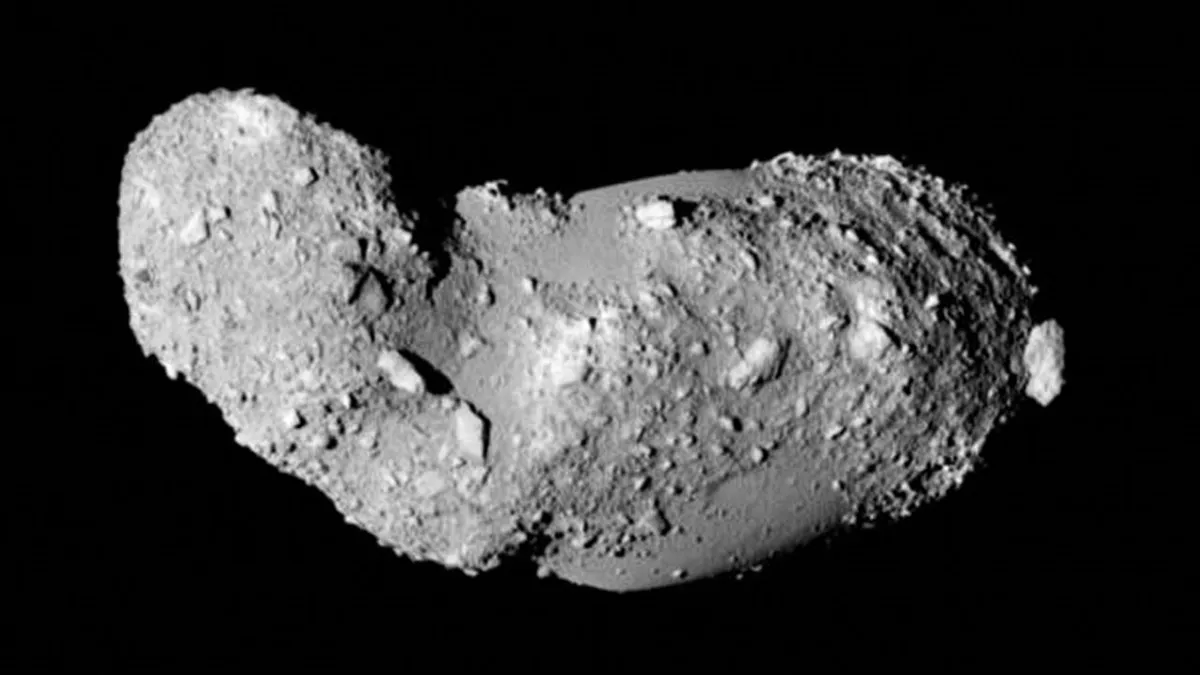
Spongebob Asteroidpants

Credit: JAXA
On the surface, the asteroid Itokawa looks like any other of the millions of asteroids floating around the solar system. About 500 meters long, it's not even particularly big. It's a big gray space potato. But little did you know, this asteroid is actually doing an incredible Spongebob impression. 

Let me explain: Itokawa is a rubble-pile asteroid, which means kind of what it sounds like. It's not exactly solid, more a collection of boulders loosely held together by gravity. A lot of the asteroid is empty space. It's porous and thus, extremely difficult to destroy. Yes, it's absorbing blows like it's made of some sort of spongey material

I'm mostly writing about this because I thought the comparison was funny, but there are legitimate reasons for studying rubble-pile asteroids. For one, the material is incredibly old, as old as the solar system itself, basically. Since Itokawa is basically indestructible, of course it's going to be made of basically pristine material. Also, it presents a problem for Earth. Itokawa may not threaten Earth in any way, but what if another rubble-pile asteroid is coming our way? Our strategy for dealing with that involves launching a big, heavy object like we did with DART in September 2022 (and quite successfully, I might add, we shortened the moon's orbital period around its host asteroid by 33 minutes). A porous asteroid probably wouldn't react the same way to being shot in the same way. It would likely absorb the blow more efficiently and would be much less effected. That's a problem, and one we'll have to work out. Maybe we could try a pie made in a bomb factory.

Friday, January 6, 2023

Kepler's First Planet Will Soon Be Eaten

Soon being a relative term, of course, this is still astronomy. 

The Kepler Space Telescope did a lot of great work in the hunt for exoplanets over its 10-year lifespan; no other telescope has been so prolific in that field. Kepler alone is responsible for discovering over 2,500 exoplanets. One of those planets had to come first though, and that planet is Kepler 1658b, a so-called Hot Jupiter that orbits its star in just 3 days. (If you're wondering why it's not called Kepler 1b, the planet was initially dismissed as a false alarm until its existence was confirmed in 2019, 10 years after the initial discovery.)

Unfortunately, it's also dying. Kepler 1658b is spiraling in toward its star, with its orbit shortening by 130 milliseconds every year; in just 2.5 million years, give or take a few hundred thousand, it will be swallowed up. Obviously, a couple million years is a long time. If you scale the planet's life down to a more human life span, however, it's only got a month or so to live. That's not so long. So, if we ever want to visit an utterly inhospitable, searing-hot gas giant, we'd better get a move-on with the whole interstellar travel thing.

Friday, September 30, 2022

Earth Punches An Asteroid In The Face For Science

You may have heard about this already, but NASA recently attacked an asteroid. And that's not really hyperbole. In fact, NASA went all in with the DART space probe, literally launching the half-ton probe into Dimorphos, a 500-foot-wide asteroid in orbit around Didymos, a slightly larger asteroid. There's a very good reason they did this: To test whether or not NASA could save Earth from asteroid impact. 

It's really simple physics. Slam an object into another object, and that second object's trajectory will be altered. Now, even moving at 14,000 MPH, DART won't alter Dimorphos' orbit by that much. This is a half-ton spacecraft versus a giant boulder weighing millions of tons. But NASA is hopeful that they will see something (they're hoping for shortening the orbital period by 1%, or 10 minutes), which is why they undertook this test on a moon, rather than any old asteroid. It's much easier to see a change in an orbit that's only a few thousand miles long, rather than an asteroid orbiting the sun, where the orbital circumference would be a couple hundred million miles long. 

A 1% orbital period change isn't a lot, obviously, but remember, this is space we're talking about. If we detect an asteroid or comet coming straight for Earth from far enough away, a 1% change in trajectory would absolutely make the difference between that object hitting and missing Earth. So, in conclusion, NASA is testing an Earth defense system, and unless physics lets us down, it should work. You can hopefully take "asteroid impact" of the list of potential apocalypses. 

Thursday, July 28, 2022

Now That James Webb Is Active, What's It Been Up To?

Obviously, the big space news this month is James Webb, and the numerous images it's sent back. You've probably seen that iconic first image, the deep field view of a tiny corner of the universe, peering back billions of years. But it's done more than that, and this is a good review of the telescope's first couple weeks of activity. I'm excited for what's to come: James Webb has imaged the TRAPPIST-1 system, well known for hosting multiple potentially habitable planets. The data's still being analyzed, but we'll know soon.

James Webb's iconic first image.


Wednesday, July 6, 2022

Voyager Probes Begin Their Long Goodbye

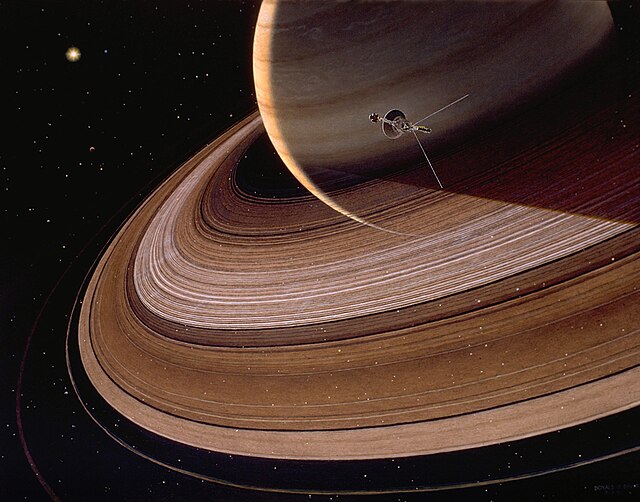
Voyagers 1 and 2 have lived a remarkable life. We're at 45 years now, 15 years longer than I've lived, and yet they're still out there, still reporting back to an increasingly distant Earth. And if NASA has its way, they will continue to do so for another 10 years. But the Voyagers were not made to live forever. Their plutonium power supply is losing potency at a rate of 4 watts a year, and so, to keep the probes going as long as possible, some of their instruments will be shut down. The power just cannot be spared. 

But while the Voyagers will eventually run out of power, let's not forget all the work they've done over their long lives. That's a long article, but very informative. I didn't know that the engineers essentially snuck one over on the government, utilizing slightly more expensive parts to make the probes much hardier. They were only supposed to last a few years, not 50. Just think what we would have missed out on if they hadn't bent the rules.

Wednesday, March 30, 2022

We've Found 5,000 Exoplanets

5,000 is a lot of planets. It's especially a lot when you consider that the first extrasolar planets were discovered 30 years ago, in 1992. While we haven't quite found that second Earth yet, we've discovered all sorts of strange and interesting planets. They've been mostly gas giants, but that does make sense; gas giants are big and easy to spot, especially the ones orbiting right up close to their star. Those hot Jupiters are probably very overrepresented and not actually as common as we might think.

Anyway, not much else to say, I just thought this was a neat milestone that deserved a little mention. Here's to the next 5,000, which probably won't take another 30 years.

Thursday, February 3, 2022

The End Is Scheduled For the ISS

As a new and exciting era of space exploration begins with the James Webb Space Telescope, another ends. The International Space Station has a definitive end of life, scheduled for a controlled deorbiting in 2031. However, it won't be easing into retirement, with NASA planning a full load of science in the next 9 years. Yeah, those goals are a bit opaque at this point, in the general "do science for the benefit of humanity" sense, but it's not going to be like Skylab which sort of sat around unused for the majority of its time up in space.

A big question for the post-ISS future: What comes next? NASA is betting on commercial space station, which is ... ambitious. Private space flight is definitely something that exists, but an entire space station? I wouldn't be surprised to see that 2031 date pushed back a bit, since NASA said they definitely want some overlap between the first commercial station going up and the ISS coming down. I'm not sure I'm a fan of the only space stations being commercially owned. These private space companies aren't owned by the greatest of people.

Friday, January 28, 2022

James Webb Has Arrived

Yes, the James Webb Space Telescope has arrived at its final resting spot (the second Earth-Sun Lagrange point) and has fully deployed. Now all we have to do is wait for it to cool down, and the science will start to pour in. Bonus points: It seems to have used less fuel than initially predicted to reach L2, so the James Webb team says the telescope should be able to operate beyond the 10 years they originally planned on. That's some great news right there.

Thursday, January 6, 2022

A Post That Isn't About Golf or Beer

It's been a while, hasn't it? 

I suppose the big news as of late is the James Webb telescope, which has finally stopped being a punchline and is actually out in space, heading toward its final position a million miles from Earth, off at the Earth-Sun Lagrange Point 2. As of January 6, it's deployed its radiator and its secondary mirrors. It won't be fully cooled off until summer, but the deployment process has gone well thus far. And it has to, considering that nothing can go wrong. It's not like Hubble, there's no fixing the mirror if it's misaligned. In that regard, it's probably a good thing they took so long to launch it. Still, I can't imagine anyone on that project has done much sleeping in the past couple weeks. I know I'd be struggling.

Oh, and don't worry, we'll be right back to our regularly scheduled golf and beer programming. 

Thursday, September 2, 2021

Could Life Exist on Mini-Neptunes?

It would certainly make the search for life outside Earth a lot easier if life could exist on the class of planets astronomers have dubbed "Hycean" worlds. Hycean planets are otherwise known as mini-Neptunes because of their diameter (bigger than Earth, smaller than Neptune) and their make-up, having large hydrogen atmospheres. These mini-Neptunes don't actually have much more mass than the Earth.

According to a new study, scientists believe that Hycean planets may actually be a prime source for life. The reason is simple: These planets likely have oceans of liquid water underneath the hydrogen atmosphere, and we all know life loves liquid water. In addition, Hycean planets have proved to be quite common in the universe, and it is believed that detecting biosignatures in the atmospheres of these planets would actually be easier than on standard terrestrial worlds. The plan is to use the James Webb telescope (which is finally ready for launch) on a number of Hycean planets within 200 light-years of Earth, scanning them for molecules consistent with life. It wouldn't be definitive evidence, but it would be closer than we've come yet, and that would be big news.

Thursday, July 29, 2021

Bad News for Martian Life Enthusiasts

In the past few years, the Mars Express orbiter scanned the Martian polar ice caps with radar and discovered evidence of liquid water in the form of super-salty lakes below the surface. In terms of finding life, that's a good thing. Where there's water, there's probably life. But there's a problem with that, according to a new study. In order for liquid water to exist at the poles, it would require a lot more energy than what Mars is capable of providing, at least as far as we know.

There's another problem, according to the study, in that there's a type of clay, abundant on Mars, that can give the same radar signature as water. So, let's consider the evidence; either the radar signature came from something known to exist on Mars in significant quantities or there are lakes down there which defy the laws of physics and thermodynamics. Perhaps there is still life on Mars, but the polar lakes theory is a dead end.