Featured Post

Review: Southern Pines Golf Club (Part 1)

For our final golf course on this North Carolina getaway, we turn to Southern Pines, which would appear on a surface level to be the third m...

Showing posts with label medicine. Show all posts

Wednesday, June 4, 2025

Schistosoma mansoni’s Big Adventure

To most people, a bathroom is a purely practical thing. You go, you do your business, and you leave. It is not a place to be celebrated. But archaeologists aren’t most people. To them, discovering an old toilet buried in the earth is a window into the day-to-day life of a person who’s been dead for hundreds, if not thousands of years. Sure, that does mean digging through old poop, but the things that can be learned are so worth it.

Case in point, a study was recently published in Parasitology about a new discovery found in a 500-year-old latrine in Bruges, Belgium. Within that latrine, located inside what served as a meeting house and administrative seat for the Spanish merchant community in the city, the researchers found an egg belonging to Schistosoma mansoni, a parasitic flatworm.

S. mansoni is not typically the sort of houseguest one wants in their bathroom. In fact, as the parasite responsible for causing schistosomiasis, a disease that infects 200 million people worldwide and is the second-most deadly parasitic disease — only topped by malaria — it’s kind of the exact opposite of a welcome visitor. Particularly if you’re a Spanish merchant living several hundred years before the advent of a cure for the disease infecting your gut.

For the researchers, though, finding the egg in Belgium helped solve a mystery involving S. mansoni while also demonstrating the connectedness of the world, even in an age before planes, trains, and automobiles.

Today, S. mansoni is endemic throughout the tropics, but it is not native to much of its current range. A thousand years ago, the worm only lived in Africa. Somehow, it managed to find its way across an ocean to South America, and the discovery of the egg in the droppings of a Spanish trader demonstrates how. The Spanish merchants of Bruges were instrumental in the import of commodities from Africa such as gold and ivory, as well as the slave trade. And if this one hapless Spaniard could carry S. mansoni to Belgium, others like him could certainly carry it to all corners of the world.

Not only do the study findings demonstrate the complexity and interconnectedness of urban life, even in medieval times, Maxime Poulain, an archaeologist at Ghent University, said in a press release, it shows how Bruges, an international trade and cultural hub, “inevitably also facilitated the spread of diseases through its strong maritime trade networks.”

Hopefully, as our unfortunate merchant sat upon the toilet in Bruges so many years ago, the foresight that his plight would provide a group of scientists with a fascinating insight into city life and the movement of a nasty tropical disease was enough to provide comfort as the flatworm ransacked his body. Totally worth the debilitating disease.

Wednesday, May 7, 2025

A Viking of Infinite Morbidity, of Most Severe Sinus Infection

In life, the Vikings had a reputation as fearsome warriors. A reputation perhaps only partially warranted, considering their extensive trade network that spread across the entirety of Europe, but there is no denying that for hundreds of years, the prospect of Viking attack put a chill into the hearts of millions of medieval Europeans.

In death, however, the multitude of Vikings buried at Varnhem Abbey in Sweden are much the same as any other thousand-year-old skeleton: frail and brittle. This presents a challenge to scientists who wish to study the bodies, as most methods of analysis are incredibly invasive, and the methods that aren’t, such as a strictly visual analysis, are very limited. It’s difficult to tell how a thousand-year-old Viking lived and died simply by looking at their bones.

A team from the University of Gothenburg may have a middle ground — a way to look deeply into the heart of a Viking skeleton without dragging it into the lab and dissecting it. In a study published in British Dental Journal Open, the researchers examined a set of skulls from fifteen individuals buried at Varnhem using computed tomography, or CT scans. The CT machine takes a series of x-rays and forms a 3D image, allowing the researchers to dive deep into the skeletal remains without actually disturbing them in any physical way.

“While we can't study the damage in the soft tissue because it's no longer there, we can see the traces left in the skeletal structures,” study coauthor Carolina Bertilsson said in a press release.

And what did the Swedish researchers find specifically in the remains they analyzed? Quite a lot, actually. Perhaps unsurprisingly for a group of people living hundreds of years before the advent of modern medicine, the Vikings of Varnhem had quite a few medical problems. Far more than anticipated. Through CT scans, the researchers were able to identify osteoarthritis, various oral diseases, cysts, and even sinus and ear infections in almost all the individuals they examined.

Of course, while the work of archaeologists has undeniably become easier, there is a crucial downside to the new research: Somehow, Hamlet delivering his famed soliloquy to a 3D model of Yorick’s skull on a computer screen lacks the je nais se quois that Shakespeare intended. And somehow it seems unlikely that the local theater company will be able to rent out a CT machine every time they want to perform Hamlet. It’s either that or hospitals will have to start doubling as playhouses.


Friday, February 2, 2024

"I Think I'm Sick ... Time To Party!"

It's a cliché you see play out in virtually every zombie movie: A beloved side character's been bitten, but no one saw them get infected. So they naturally claim to be perfectly okay if anyone asks, hiding the wound and pending zombie conversion. Then, a bit later, at the worst possible time, the infection will take over, and the protagonist will have dramatically kill their friend to spare the whole group. 

That leaves us on the other side of the screen to yell our frustration at the TV: "No, don't hide it, you're not going to beat the zombie virus, just confess and don't screw over everyone else!" Because if we were infected with a horrible illness that would harm other people, we would absolutely tell the truth about it, right?

About that ... 

In a series of surveys spanning several thousand people, researchers from the University of Michigan found that 75% of people reported hiding an infectious illness from others and would do so again in the future. Health care workers, who you would hope recognize the risk of being sick around sick people, were better about hiding their own infectious diseases. But not by much. Just over 60% of health care workers reported hiding illnesses. Thanks for that one.

Naturally, in one of the sub-surveys where people were asked if, in a hypothetical situation where they were sick with a severe illness of minor, moderate, or severe chance of spreading infection, not many people said they'd hide their infection. But in another sub-survey where actual sick people were included, those were sick were much more likely to say they'd keep their social plans and cover up their illness than healthy people were.

Now, seeing as this is the United States we're talking about, home of sucking it up and doing your work anyway (or else you're fired), one might imagine that most people felt pressured into working through their illness because their actual ability to live depended on it. And yes, that is a motivating factor. Some people definitely had to fight through an illness at work because they didn't have sick leave. But the most-reported reason for hiding illnesses was because it would interfere with social plans like dating, boarding a plane, or going to a party. You know, really important, vital things that you couldn't possibly miss.

Of course, having been through the pandemic, this research is really confirming what we already knew: That people are kind of dumb and terrible. Even the researchers themselves say that "solutions to the problem of disease concealment may need to rely on more than just individual good will." And if that's not an inspiring thought to finish off your week, I don't know what is.    


Friday, January 26, 2024

CAR T Could Be The Hero Of Tomorrow ... Or The Villain

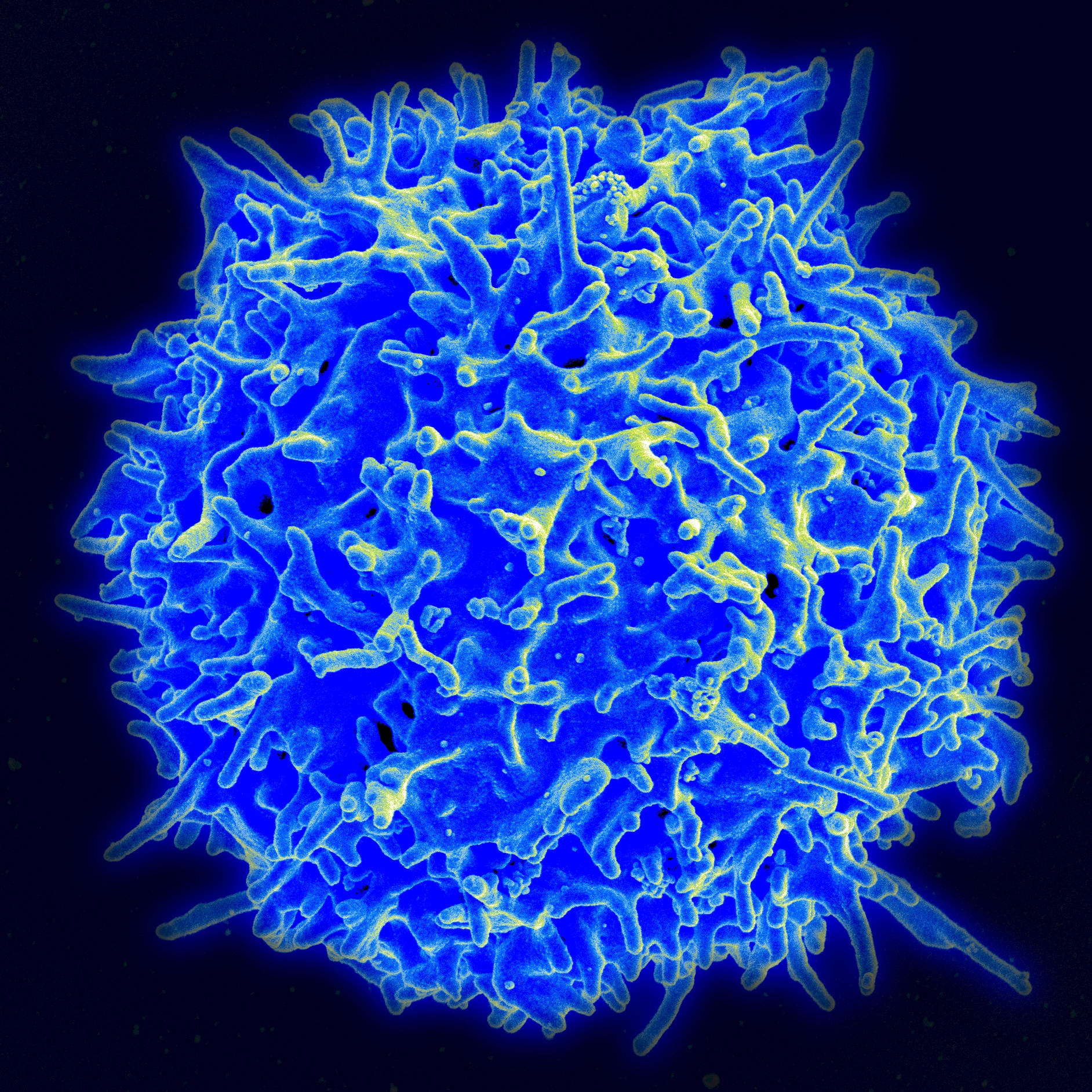
If you're a hematologist or oncologist, chimeric antigen receptor T cells have been a source of wonder and relief. While it's still early days for CAR-T treatment, which was first approved by the Food and Drug Administration in 2017, over 10,000 people with blood cancer have been treated with CAR-T drugs, and hematologists tend to think of CAR-T as a game-changer.

We'll circle back to that in a minute, but first, there's been an interesting bit of news regarding CAR-T from a group of researchers in New York. These researchers are seeking an answer to a fairly simple question: What if we didn't have to age? No biggie, right? 

To be more accurate, what the researchers were actually investigating is senescent cells – old cells that no longer replicate which build up in the body over time, causing damage and harmful inflammation wherever they go. While not the only source of aging and human maladies, senescent cells certainly contribute heavily to the wear and tear our bodies suffer as we get older.

We already have drugs that can eliminate senescent cells, but as the researchers noted, these treatments require constant transfusions. But when they tested CAR T cells in mice after modifying them to target senescent cells, they discovered that the mice lived permanently healthier lives after just one treatment. Lower body weight, improved metabolism, increased physical activity, and best of all, this happened without causing tissue damage or toxicity. Older mice were rejuvenated and refreshed, while younger mice simply aged slower.

Now, humans live a lot longer than mice, so it's likely we'll need multiple transfusions over the course of our lifetimes to sustain the CAR T anti-aging effect, but we're still talking periods of years rather than days or even hours for current anti–senescent cell drugs. And if we've learned anything from the Ozempic debacle, people will absolutely line up to take a miracle drug, even if it means taking away from the people who actually need it.

And speaking of patients who actually need CAR T cells, they've been in the news for another, more interesting reason. The FDA has told the various CAR T manufacturers to add a warning to the labels of their respective drugs, noting that their anti-cancer products ... can cause cancer.

Since the first approval of a CAR T drug, the FDA has received 25 reports of rare blood cancers in patients who underwent CAR T treatment. In additions, multiple studies have been recently published that have noted a potential link between CAR T and new blood cancers.

Well, this is awkward.

It isn't actually as bad as it sounds. Ignoring the slight irony of people developing a new blood cancer after undergoing treatment for their initial blood cancer, 25 people is less than 1% of the total number of people who have received CAR T treatment. Also, it's still unknown whether or not the relationship between CAR T and these new blood cancers is causal or coincidental. The problem could very well be other things associated with cancer treatment, such as radiation or chemotherapy.

The solution then is really quite simple for cancer patients: Rather than bundling your cancer treatments all together, you should really order your chimeric antigen receptor T cells on their own. You know, à la CAR T.

I'll show myself out.

Friday, January 12, 2024

A Great Artificial Eye ... Lidless ... Wreathed In Tears

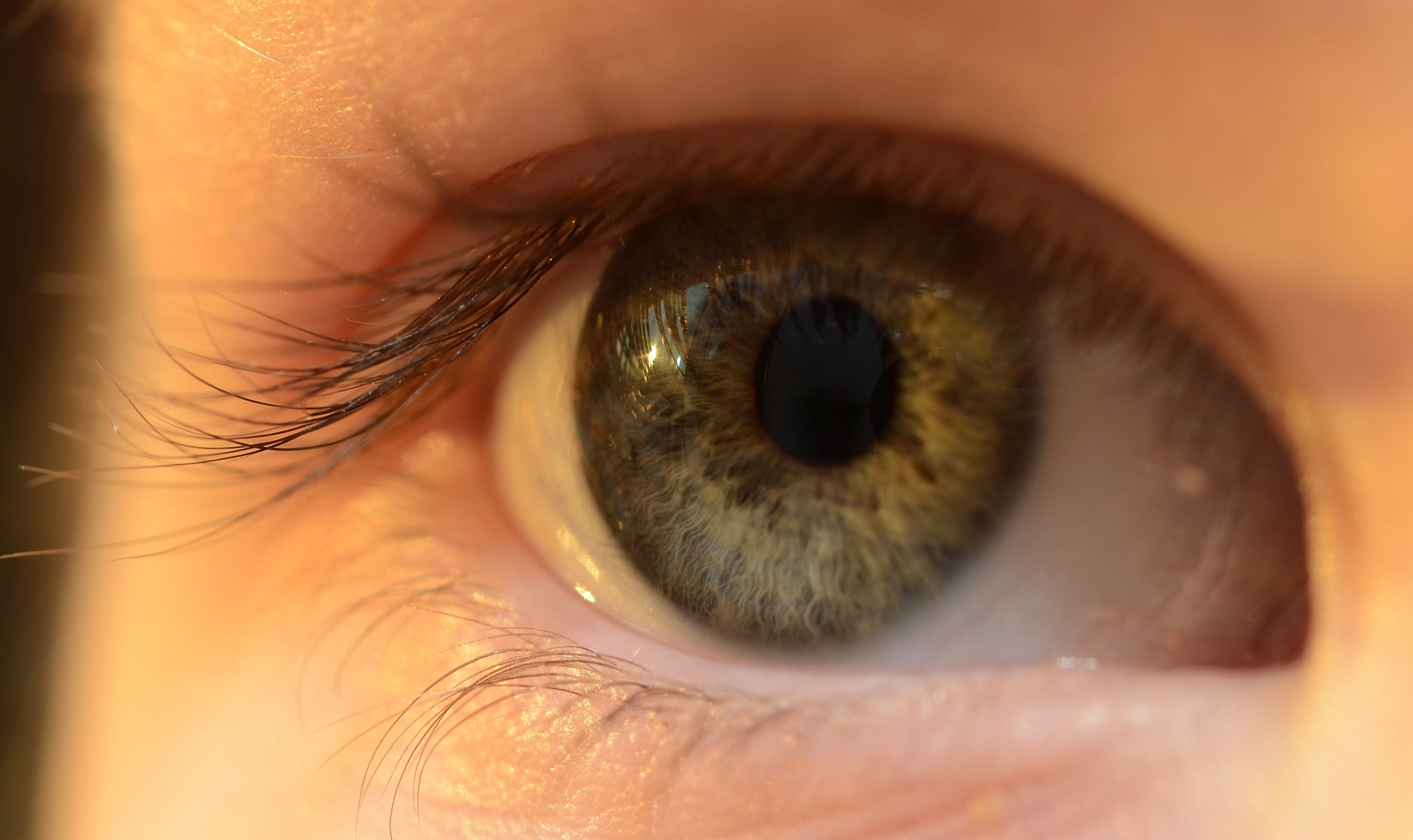
Science is weird sometimes. The things researchers do in order to prove a hypothesis or solve a problem can often come out as morally or ethically ... odd, to be generous. And growing crying human tissue in a petri dish? Yeah, that definitely comes down on the "manmade horror beyond human comprehension" side of things.

Okay, okay, it's a little more complicated than that. In reality, we don't have good models of human conjunctiva – the tissue that covers the white of the eyeball and the inside of the eyelid. It's a complete mystery as to why. "Why sure slightly overeager doctor, please harvest the outsides of my eyeballs! Sounds like a great and not at all traumatic experience."

Unfortunately, since we do know so little about the conjunctiva, growing an artificial version did involve harvesting naturally occurring human conjunctiva. But only a little, we swear! Most of the conjunctiva organoids the researchers experimented were artificial and grown in the lab.

Oh, you knew there would be experiments. It was never going to be enough to simply create crying human tissue. We needed to give it a reason to really cry. Hey, plenty of diseases affect the conjunctiva, we have to start somewhere in order to help treat those diseases.

And funnily enough, as the researchers exposed their artificial eyes to various stimuli, simulating different allergens, they found something unexpected: Tuft cells, which have never been found in the eye before. These cells are more typically associated with the intestines and their involvement with GI disorders like Crohn's disease. In the conjunctiva organoids, the tuft cells multiplied when the organoid was exposed to allergens, suggesting they play a role in the eye's reaction to allergies.

In addition, being able to grow conjunctiva in a lab suggests a future ability to replace damaged conjunctiva; that means people with ocular burns, eye cancers, or even genetic disorders that have damaged the eye could have their eyes repaired. It's just too bad Sauron spent all his time trying to conquer Middle-Earth; if he'd invested into ocular research maybe he could have grown himself some conjunctiva to combat that intense dry eye he had going throughout the Third Age.


Friday, January 5, 2024

Life's No. 1 Question, Finally Answered

Why is our urine yellow? It's almost as basic a question as "why is the sky blue?" And yet, the answer to the first question has been surprisingly elusive. Until now.

Perhaps it's slightly disingenuous to say we don't know why our urine yellow. We've actually known for over a hundred years that urobilin is the specific chemical compound responsible for that yellow coloration, and that the more well hydrated you are, the lower the urobilin concentration and the clearer the stream.

The question we didn't know is where the urobilin comes from, and that's the question a team of researchers from the University of Maryland have answered. And as with so many health-related issues, it all comes down to your gut microflora. Those little guys show up in so many places, being linked with diseases as varied as inflammatory bowel disease (duh), allergies, diabetes, and even depression. 

So, what's the gut microflora's role in this little escapade? To answer that question, we actually have to go even deeper into the body, right down to the blood that pumps through our veins. Red blood cells don't last forever. And as they degrade, they secrete a bright-orange chemical called bilirubin, which is moved into the gut so it can be excreted, reabsorbed, or in this case repurposed into something else. 

In this case, our gut microflora process the excess bilirubin by producing an enzyme, bilirubin reductase, that changes bilirubin into a byproduct called urobilinogen. If that sounds a lot like our original culprit urobilin, it should; urobilinogen doesn't last long before it spontaneously degrades into urobilin.

While this newfound urine origin story is very cool, the researchers went a step further and investigated the urine of multiple people, finding that bilirubin reductase is actually often missing from both newborns and people with inflammatory bowel disease. Could we be looking at a potential means of treatment for gut-related diseases? Perhaps, but the researchers noted this is merely the foundation for further research, not an end goal. Typical scientists, they're going to make us all sit through an entire 3-hour movie before we can cure all our pee-based diseases, and we don't even get intermissions anymore. That bathroom is going to be FULL when the movie ends.   


Friday, December 29, 2023

Dr. Mario, You're Needed In The Psych Ward, Stat!

The holidays can be a tough time for a lot of people. Maybe it's been a tough year, maybe you can't get back home to visit family, or maybe you work retail and you've had to listen to Mariah Carey sing the same song 50 times a day for the past 2 months. The point is, much like Charlie Brown, depression can run rampant as the days grow short and the nights grow bitterly cold.

Fortunately, for those of you side-eying Snoopy's gaudy Christmas display as hard as Charlie Brown did, another pop culture icon is here to alleviate the blues, holiday or otherwise, courtesy of a study published by a group of German scientists. According to them, recent research has shown video games to have some promise in alleviating symptoms of major depressive disorder, so to further test this theory, they gathered a group of 50 people with MDD and split them into three groups for a 6-week intervention. The first group received standard therapy, the second group received a cognitive training computer program called CogPack, and the lucky third group received Nintendo Switches.

Gee, it sure is a mystery why the third group saw the biggest improvement in their depressive symptoms.

Okay, okay, fine: the third group were directed to play Super Mario Odyssey for the intervention period on provided Switches. However, the results were no joke, as those who got to jump around New Donk City with everyone's favorite Italian plumber saw a 50% improvement in their depressive symptoms, compared with the improvements seen with those who received CogPack, and even beating out those who received standard MDD therapy. 

In addition, and to absolutely no one's surprise, the Super Mario Odyssey group also reported significantly higher motivation to continue their treatment, compared with the CogPack group. So, big thanks to the scientists of Germany, who have effectively told us that people would rather play a critically acclaimed video game than a boring educational computer program. Stay tuned for next week's big news story: People prefer Legend of Zelda: Tears of the Kingdom to having their teeth pulled out. 

Friday, December 22, 2023

We Wish You A Merry CHRISTMAS

Break out the figgy pudding and deck the halls, it's everyone's favorite time of year: The British Medical Journal's annual Christmas issue has released. And as is tradition, the doctors publishing in this journal are committed to answering only the most pressing holiday-based medical questions.

Funny enough, one particular study is absolutely worth mentioning, considering last week's blockbuster piece on how an unfortunate individual received a bullet in their butt after taking their handgun through an MRI machine. In what has to be the coincidence of the year, a group of scientists from Singapore and England have conducted a study analyzing the behavior of common metallic health care–related objects in the presence of a 3 tesla MRI machine.

While a gun was not included in the Common Healthcare Related Instruments Subjected To Magnetic Attraction Study (CHRISTMAS) trial – this was an American-free research project – the researchers tested numerous other metallic items that would be commonly found on patients or in medical facilities, such as coins, biscuit tins (there's the British coming through for us), a cell phone, a credit card, and a knife.

The procedure was quite simple; the test item was loaded into a test rig the researchers called the electromagnetic launch funnel (ELF), and the MRI machine was turned on. The item was slowly guided toward the center of the machine, and the distance from the MRI machine at which the test item was launched – the site where applied newtonian mechanics triggers acceleration (SANTA) – was recorded. In addition, a layer of ballistic gel (sorry, no cute acronym this time) was deployed around the machine to simulate human tissue, and if any items managed to penetrate the gel, the depth of penetration was also measured.

Perhaps unsurprisingly, the knife penetrated deepest into the ballistic gel and had the second highest SANTA value, beaten only by the 220 g biscuit tin. The researchers did find that weight did not necessarily correlate with higher SANTA values; for example, a stethoscope's SANTA score was half that of the knife and heavy biscuit tin. The researchers warned any physicians to avoid bringing Christmas or seasonal treats into the MRI room, or to keep the treats in their original paper packaging, as a biscuit tin's SANTA value is just too high for comfort.

On the positive side, however, objects such as the cell phone and credit card maintained their functionality and memory, and the MRI machine maintained image integrity even after electronics passed through its magnetic field. So, you may not be able to take your biscuit tin with you when you get an MRI, but if you want to post viral TikToks from within the machine, you should be good to go. And that's a CHRISTMAS gift worth celebrating.


Friday, December 1, 2023

But Can You Play A Sad Song On The World's Smallest Mustache?

Have you ever wondered what a red blood cell would look like if it had a mustache? No? Isn't that one of those things every person thinks about? 

Apparently not.

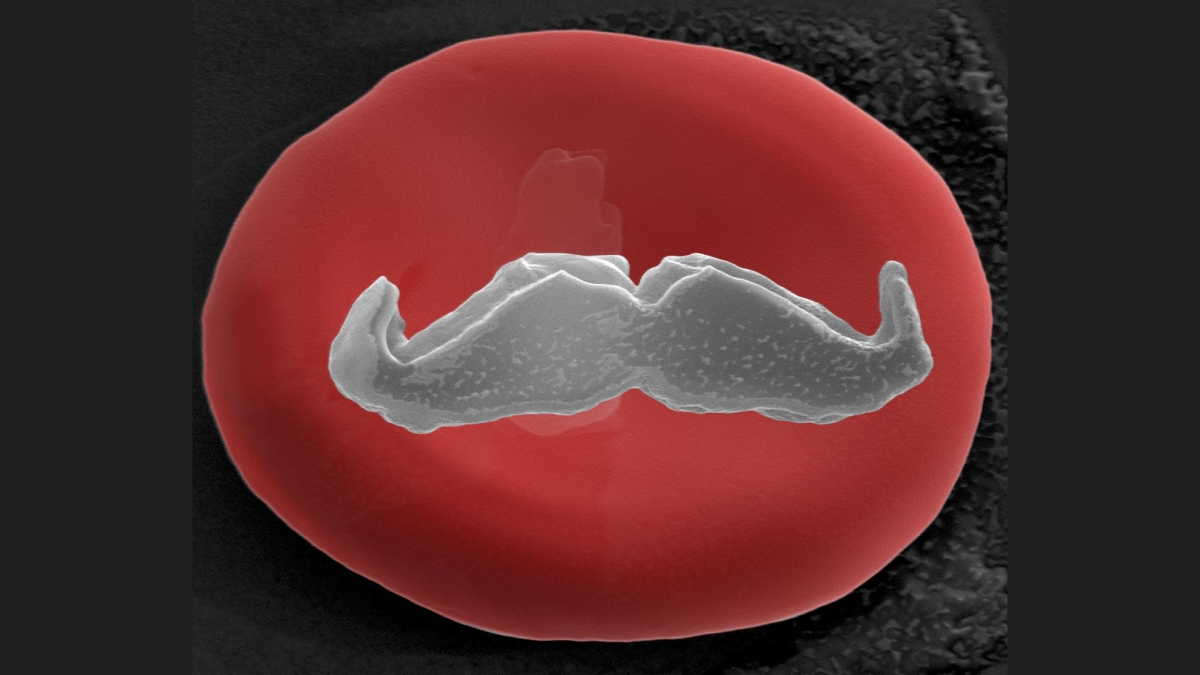
Anyway, now you don't have to not wonder, because a team of scientists from Australia has equipped a red blood cell with the world's smallest mustache. And best of all, they did it for a good reason.

Truly, a glorious mustache. Credit: Australian Red Cross Lifeblood

The project was actually a collaboration between the Australian Red Cross Lifeblood organization and Movember, a men's health charity that operates all around the world, and is meant to act as a symbol for the importance of blood donation in men's health. After all, according to a spokesperson from the Lifeblood organization, donating blood doesn't just help the community, it can also help donors learn about their own health. 

Obviously, one doesn't simply attach a 5-mcm mustache to a red blood cell. The process behind the image is impressive: First things first, the "Mo" mustache needed to be crafted by layering 3D-printed polymer onto a small stalk. Then, the blood cell was attached to a gold slide and coated with an extremely thin – we're talking just a few nanometers – metal layer. The mustache was carefully affixed to the cell, and a powerful electron microscope scanned the ensemble.

The end result is ... well, it kind of looks like Mr. Snrub. But that's okay, after all, this is a very cool project with an actual message behind it. And who doesn't like the way Snrub thinks? Take care of the nuclear plant, er, yourself. Yes, yourself, that'll do. Not the nuclear plant.


Wednesday, April 8, 2020

Smarter Than Your Average Toilet

Since the humor medical column I work on at work has been halted for the duration of the pandemic, I have no place to write about this: A smart toilet that recognizes your butt and analyzes poop for diseases. The researchers attached a whole bunch of sensors and whatnot to a regular toilet, strapped some volunteers in, and had them do their business. The toilets can not only recognize your fingerprints, but your, and this is a phrase that is actually used, anal print as well. Word still out if this was planned before the pandemic, or a bunch of really bored engineering students just wanted to have a laugh while they waited things out.

Thursday, March 28, 2019

Another Post From My Actual Job

This one's about beer, which is always fun.

An OTC beer keeps the doctor away

There’s plenty of evidence that a beer or two every now and again is good for your health. But the owner of the Seery Athlone Brewing Company in Addison, Ill., may have taken things too far.


While the reason of its closure just a few months after its grand opening in December 2018 is technically still a mystery, we feel fairly safe in speculating that it had something to do with the fact that brewery owner James Stephen was making his beer at the same location as his main business – a pharmaceutical company engaging in testing of over-the-counter drugs.

In fact, the Food and Drug Administration sent Mr. Stephen a letter in August 2018 warning him that, among numerous other transgressions, fermenting beer literally 10 feet away from where drugs were being tested is a health hazard, for both the beer and the drugs. The FDA ordered the brewery shut down, but the intrepid Mr. Stephen soldiered on, to obviously limited success.


Our advice to Mr. Stephen? Go all in with the pharmaceutical theme. Who wouldn’t want to drink an ibuprofen IPA, ranitidine red ale, loratadine lambic, pseudoephedrine porter, or diphenhydramine doppelbock? You’ll make millions!

Thursday, January 10, 2019

A Post In Which I Write About Poop

You know, maybe it's because it's the beginning of the year, but I was completely stumped as to a subject to write about this week. There just isn't much cool or interesting science news floating around right now, since New Horizons is taking a break from beaming back new information. But you know what? For my actual job, occasionally I write things, and I'm kind of proud of what I wrote this week for our site's "Livin' on the MDedge" feature (The name of the feature was my idea too). So you can read that this week.

What’s Latin for ‘poop’?

The study of the human microbiota has become incredibly important in recent years, but there’s no getting away from the fact that it entails experimenting on poop. Remarkably, no one’s come up with a proper technical name for this unsavory activity. However, thanks to a collaboration between a gastroenterologist and a classics professor at the University of North Carolina, that deficiency is no more. You’ve met the in vivo and in vitro study. Now, please welcome the “in vimo” study!

Why in vimo? The term fecal or “in feco” might seem obvious. But the Latin root word never referred to poop, and if there’s one thing scientists can’t have, it’s improper Latin usage. The Romans, it turns out, had lots of words for poop. The root word of laetamen referred to fertility, richness, and happiness – a tempting prospect – but was mostly used to refer to farm animal dung. Merda mostly referred to smell or stench, and stercus shared the same root word as scatology, which refers to obscene literature. Fimus, which specifically refers to manure, was thus the most precise, and it was used by literary giants such as Livy, Virgil, and Tacitus. A clear winner, and the in vimo study flushed the rest of the competition away.

And just in case you think these researchers are no fun, the name they chose for the active enzymes collected from their in vimo samples? Poopernatants. Yes, even doctors enjoy a good poop joke.

You can see the full feature (my dad is also a contributor, he wrote the "Resistance is fecal" item) here.

Sunday, July 1, 2018

Beer of the Week

The beer: Saw Bones Ginger Table Beer

Brewed by: Flying Dog Brewery, Frederick, Maryland.

Description (from the website): "During the height of the Civil War, our hometown of Frederick was given the nickname “One Vast Hospital.” With Maryland smack dab in the middle of the Union and Confederacy, patients often outnumbered residents. To this day, if you stand on a quiet street after sunset, you can still hear them singing “Hard Tack Come Again No More.” Despite pioneering a good bit of modern medicine, doctors were dubbed “saw bones.” While the literal sometimes occurred for those on the wrong end of a musket, Saw Bones were also revered for hand-made elixirs in which the cure-all nature of both ginger and lemon were common. To pay homage to the hard-working people on Mercy Street, we enlisted the National Museum of Civil War Medicine to bring you a new Saw Bones in the form of a Belgian-style table beer with ginger and lemon. Crisp and clean on the palette with bold citrus, spice and malt character, it’s just what the doctor ordered."

Would I buy it again?: Definitely. For one thing, it supports a very neat local museum (the National Museum of Civil War Medicine). Also, it's pretty good. A very nice summer beer. And it's rare too, you can't even get this at the Flying Dog brewery itself, you can either get it at the museum, or at a nearby bar. That's it.